If your cat has a swollen paw, it's definitely cause for concern. Learn the most common reasons your kitty may be having paw problems and how you can spot the signs of an injury or infection in your cat's foot.
How to Tell if Your Cat's Paw Is Swollen
Depending on the length of your cat's fur, it may be difficult to see that the paw is swollen. The following symptoms tend to accompany a swollen paw, so try to examine your cat's feet if you notice any of these signs:
- Limping
- Favoring the injured paw
- Licking or biting the paw
- Heat in the paw caused by inflammation, infection, or abscess
- Possible bad odor from an infection
- Reluctant to be active
Causes of a Swollen Paw
There are many reasons that a cat's paw may swell. It could be due to something as simple as an insect bite or as severe as an infection or bone fracture. The following information is not meant to replace professional veterinary diagnosis and care; however, it may make it easier for you to describe what you see when you call your vet. According to Dr. Marie at Ask a Vet, possible causes of swelling include:
1. Insect Bites and Stings
Cats love to swat insects and bees and are sometimes stung on the paw. Bee stings and insect bites generally swell quickly and may become infected. Sometimes the stinger remains in the paw. Bites from spiders and scorpions can be very dangerous causing very painful swelling, serious infection, and death of the tissues in the infected area.
2. Foreign Body Injuries
A swollen paw can be from a foreign body stuck in a pad between the cat's toes or in the fleshy soft tissue of the paw. Anything from a thorn to a small piece of broken glass could be responsible for the swelling. If you see the object and are able to remove it with tweezers, the swelling should go down in a day or two.
If you are certain that the swollen paw was due to a minor problem such as a thorn you have removed, soak the paw in a mixture of one gallon fresh cool water with two tablespoons of two percent chlorhexidine added. Chlorhexidine is an antiseptic that is available at many drugstores. However, it's always wise to check with their vet even if the problem seems to be minor since the chance of infection is always present and the foreign object can move deeper into the paw as time passes, making it more difficult to retrieve.
3. Punctures, Lacerations, or Bruises
These types of injuries cause damage to the paw's soft tissues, fleshy areas, or pads. These injuries can be caused from stepping on a sharp object, getting caught on something or from another cat's teeth or nails. Wounds of any type can become swollen, infected, or abscessed. If you feel heat in your cat's paw, it is a sign of infection, abscess, or inflammation and needs medical attention right away.
4. Sprains, Fractures, and Dislocations
Cats love to jump, and sometimes a swollen paw can be the result of a sprain, hairline bone fracture, or dislocation from jumping, playing, or running. Some cats have received bruised paws and even fractures due to their caretaker accidentally stepping on their foot. For cats that go outside, the cause could be from an accident with a vehicle.
5. Nail Overgrowth
A cat's nails can also be the cause of a swollen paw. Nails that are too long can get caught on objects, break off, and become infected. Sometimes a long nail gets caught on something and twists resulting in a swollen joint or toe arthritis. If a nail is clipped too close to the quick, it also runs the possibility of becoming infected. It's also possible for a nail to grow too long and curl into the pad, puncturing the tissue. All these scenarios require medical attention and possible antibiotics.
6. Constriction
Objects around a cat's wrist or leg can reduce circulation leading to swelling of the paw. This could be a bandage left around the leg for too long, a tight string, or rubber band. It's possible for a cat to become entangled in something like this both indoors and outside. If your cat will let you, try to feel and inspect the leg to see if you notice any signs of these constricting objects. Should you find anything, remove it immediately.
7. Cancer
Unfortunately, cancer can develop anywhere in the body, so it's possible for a tumor to grow in a cat's nail bed or toe. These cancers can cause swelling of the cat's entire paw. Most cat foot cancers are a result of metastasis from another cancer found elsewhere in the body, particularly the lungs, so you may notice other signs of illness in addition to the swollen paw. This shouldn't necessarily be at the top of your list, but it is a possible cause to consider.
Reasons to Call the Veterinarian
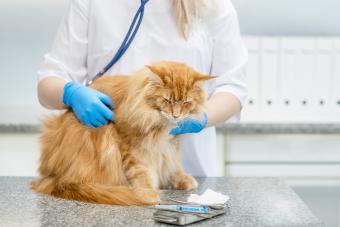
Your veterinarian is the most qualified person to diagnose the cause of a swollen paw, and they can often determine the cause of the swelling through a simple examination. In some cases, blood work or x-rays may be needed to reach the most accurate diagnosis.
If the cat's paw is warm to the touch or seems to be causing them a lot of pain, it is most likely infected. In a case like this, it's very important to call the veterinarian right away. The longer you wait, the worse the infection will become, and medication is almost certainly needed to stop the infection from spreading throughout the cat's body.
If the swelling is due to a bee sting, insect, or spider bite, your cat may need medication to stop the allergic reaction and help reduce the swelling in its paw.
Check Your Cat's Paws for Infections Regularly
All cat caretakers want their feline charges to be healthy and happy. It is a good practice to examine your cat's paws on a regular basis.
- Look for small cuts on the pads.
- Check between the toes for any foreign bodies such as slivers, burrs, or thorn.
- Check your cat's nails and trim them if they are too long.
By performing these simple acts, you significantly lower the risk of your cat ever having to suffer a swollen paw.