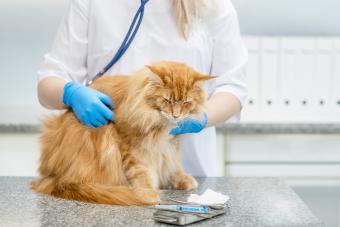
If you find yourself with a pregnant foster cat or take in a stray with buns in the oven, you’ll need to give her specialized care. During this time, a cat's physical needs, appearance, and behavior will change significantly. From the signs of cat pregnancy to nutrition and, finally, preparing for the kittens’ arrival, we have all the info you need to care for your momma-to-be.
How Long Are Cats Pregnant?
A cat's gestation period ranges from 52 to 74 days, with an average length of 65.6 days for most cats.
Stages & Signs of Cat Pregnancy
A cat pregnancy can be divided into trimesters, just like a human's pregnancy. Each trimester is about three weeks long. If you're unsure where your foster momma is in her pregnancy, there are signs to watch for and some tests your vet can use to determine if she's truly pregnant.
Stage 1: Weeks 1 to 3
It is nearly impossible to detect a cat pregnancy with the naked eye for the first three weeks. That means if you take in an unspayed stray cat, there's a possibility she could be pregnant without you knowing.
- She may become increasingly affectionate in the early weeks of pregnancy.
- Some cats might hide a bit more.
- Many don't show any behavioral changes at all.
Stage 2: Weeks 4 to 6
About three weeks after conception, a pregnant cat's nipples will turn pink. This is usually the earliest sign that any cat will show, and the kittens will be born approximately six weeks after this occurs.
- She'll have enlarged and noticeably pink nipples.
- You might notice some nausea or vomiting.
- Her belly will start to show visible enlargement around the fifth week.
- She'll probably display an increased need for affection and attention from you.
- She may sleep more than usual.
Stage 3: Weeks 7 to 9
In the final stage of cat pregnancy, you can definitely tell that she's pregnant. Her belly will become increasingly bigger, and she should have a good appetite. Most of a pregnant cat's growth will happen during the last two weeks of pregnancy.
- Her appetite will increase as pregnancy continues.
- A pregnant cat may show irritability toward other pets, regardless of their prior relationship.
- The belly will continue growing rapidly.
- She can become restless and seem uncomfortable during the late pregnancy.
- She might become more vocal.
- Most cats will hunt for a secluded place to nest prior to delivery.
- You might notice a lower appetite before giving birth.
Even though false pregnancies or phantom pregnancies happen in dogs, they're pretty uncommon in cats.
Testing Options
Looking for the signs of cat pregnancy can be helpful but isn't a surefire way to determine exactly where a cat might be in their pregnancy. Your veterinarian can perform a few different diagnostics based on your budget and how far along your momma cat is.
Ultrasound
Your veterinarian or technician can perform an ultrasound to see the kittens, just like you would with a human baby. The kittens aren't detectable until around day 21 because a lot of "false negative" results are seen before then.
Manual Palpation
Once your cat is about 21 days pregnant, your veterinarian can gently feel her belly with their hands to detect the presence of kittens. You'll want to schedule an exam for this before week five, though, because after that stage, it gets harder and harder to feel the babies as momma's belly grows.
It takes a skilled hand to feel for kittens, so don't do this at home. Squishing your cat's belly can be uncomfortable for her and could lead to complications if you press too hard.
Feline Pregnancy Test
No, at-home pregnancy tests for cats don't exist, but your vet can run one for you. They can do this as early as 20 days into the pregnancy using a pregnancy test called Witness® Relaxin to accurately determine whether a cat is pregnant.
X-ray
X-rays are the best way to confirm a cat's pregnancy and can also let your vet know how many kittens are in there. Kittens aren't visible on x-ray until at least day 42 of pregnancy, so you'll need to wait until the final few weeks before pursuing that method, and by then, you should already see the other signs of pregnancy.
Radiation exposure can be harmful, so it's best to use it sparingly. That doesn't mean you should avoid it entirely, but x-raying a pregnant cat weekly through their entire pregnancy probably isn't safe and wouldn't be recommended by your vet.
Caring for a Cat During Her Pregnancy
It can be hard to know for sure what a cat's health status was before her pregnancy, especially if she was found as a stray. But you can control the care you provide her throughout her pregnancy. Use these tips to give her everything she needs for a healthy delivery.
Pregnant Cat Exercise Needs
There's no need to limit your cat's normal activity during her pregnancy. Cats are pretty good at determining what they can and can't do based on how they're feeling, and movement is actually a good thing during pregnancy. Normal exercise during this period will help her maintain muscle tone and good health.
Nutrition for Pregnant Cats
The most important thing you can do for your cat and her kittens is to provide her with proper nutrition. Growing kittens inside her belly takes a lot of energy! Feed your pregnant momma a high-quality and high-calorie food that's designed for either pregnant or lactating cats or kittens. She should eat this through her pregnancy and until the kittens are weaned.
Because all those kittens are pushing on the stomach inside her belly, several smaller meals throughout the day are better than a few large meals. Supplements might seem like a good idea, but only offer these under veterinary supervision.
Medical Care for Pregnant Cats

Schedule an appointment with your veterinarian as soon as you discover or suspect your cat is pregnant. They can help you monitor her health and let you know of any special steps you should take for a smooth pregnancy.
Most shelters and rescues will vaccinate and deworm all cats upon entry, even pregnant cats. But if this is a cat you've found, your vet can make individual recommendations.
Related: Understanding the Stages of Cat Labor & Birth & How to Help
Preparing for the Birth of Kittens
You'll want to start preparing for kittens as early into the pregnancy as you can. Having everything ready to go will make the actual day way less stressful for you, your cat, and her babies.
Create Birthing Boxes
At least two weeks before the due date, set up a box for birthing. A box filled with newspaper works well. It's also good to have several boxes set up around the house in quiet locations so your cat can choose the one she prefers.
Avoid Clumping Litter
This might sound weird, but it's not uncommon for cats to give birth in their litter box. For this reason, don't use clumping clay litter as your cat nears her due date. Clumping litter will stick to the newborn kittens, and the momma might not clean them off after birth if this happens. Use something else like paper litter instead.
Each Cat Pregnancy Can Be Different
Pregnancies and deliveries don't always go as expected, so be prepared to face changes as they come. Let your vet be your partner throughout the process to make sure your cat receives everything she needs to have a healthy and successful pregnancy and delivery.