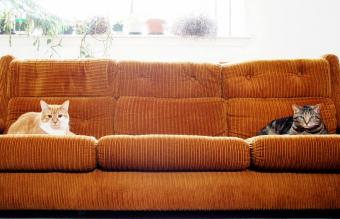
Spraying by male cats is common, but spraying by female cats is not a frequent occurrence. Regardless of gender, spraying outside of the litterbox is one of the most common concerns for cat owners. With these preventative techniques, you'll learn why cats spray and how to curb the behavior.
What is the Spray?
The deposition of small amounts of urine on surfaces, whether inside or outside of the home, is known as spraying. The spraying cat would usually retreat into the area, quiver its tail, and urinate with little or no squatting. This is usually done on a vertical surface, although horizontal surfaces can also be chosen depending on the reason for spraying.
Why Do Cats Spray?
There's a common misconception that cats only spray to mark their territory. That is one reason, but it's not the only reason. A cat may spray if they are anxious, threatened, or scared. Spraying may also signal insecurity, which can be induced by a change in routine or environment, as well as an external stressor such as other cats in the household, a new pet, or a new environment. Others are particular about the condition of their litter boxes, refusing to use them if they need to be cleaned or if another cat has used them.
Spraying can also be triggered by an underlying health or medical problem, such as a bladder infection, urinary tract infection, or urinary stones. Changes in urinary habits, such as more frequent urination, could also indicate kidney dysfunction. Because cats are unable to communicate when they are in distress, they may use changes in behavior to alert you to the problem.
Determine the Underlying Cause
Determining the underlying cause is the first step in curbing the behavior; whether medical or behavioral. Sometimes, this is easier said than done. To determine the underlying cause, ask yourself the following questions:
- Have you moved?
- Have you rearranged your furniture?
- Has anyone moved in or out of the home?
- Is there a new pet in the household?
- Do you have one litterbox per cat in the household?
- If you have a multi-story home, is there a litterbox on each floor?
- Is your cat neutered?
- How often do you clean the litterbox?
- Are there any cats outside on a regular basis or when the spraying occurs?
- Has your cat experienced difficulty urinating? Whining?
- What color is your cat's urine? Is there blood in the urine?
If you answered yes to any of the above questions, this could be the underlying cause that needs addressed.

Action Steps to Take
Regardless of the underlying cause, it's time to take action by addressing the reason your cat is spraying.
Visit the Veterinarian
Regardless of how long or where your cat is spraying, if your cat is urinating outside of the litterbox, it should first be addressed by a veterinarian. The veterinarian will likely perform a urinalysis to determine if there are any stones or blood in the urine. If there is anything found, the veterinarian will advise you regarding the next steps to take.
Spay or Neuter
Although cats who have been spayed or neutered can still spray, sterilizing them will assist to reduce this behavior. If your cat isn't already neutered, schedule an appointment as soon as possible. This will lower their hormone levels and decrease their desire to spray. Female cats can spray, although this is a behavior not often found in female cats.
Set a Routine
Your cat will feel more secure and structured if you stick to a routine. Leave your cat with some interesting and engaging toys to keep them occupied while you're away, and play with them on a regular basis when you get home to make them feel loved and cared for.
Pheromones Can Be Helpful
A variety of products are available on the market to help cats relax and reduce their stress levels. Collars, sprays, diffusers, and supplements are examples of these. While these products have no odor we can detect, they can be comforting to cats, making them less anxious and less prone to spray.
Litter Attractants
Litter attractants can be helpful when attempting to sway the cat to use the litterbox. They're easy to use and known to be safe for your cat. If your cat is frequently spraying and not using the litterbox, these could be of use to you.
Multi-Cat Households
If the problem stems from a new cat in the home, it may be necessary to keep the cats away from one another temporarily with their own litter boxes and sleeping areas. When the cats are properly supervised, reintroduction can begin. Allowing the cats to interact for positive experiences such as feeding, treats, and play sessions will help them become accustomed to one another's presence. Continue this process for several weeks.
Clean Thoroughly After Each Spray
Although it can be time consuming and, at times, extremely frustrating, it's important to thoroughly clean the area after your cat sprays. In order to continue resolving the issue, the scents from prior markings must be blocked. If the area isn't cleaned, your cat will be enticed back to the site, which could worsen the spraying behavior.

Keep in mind, following your sense of smell may reveal soiled spots that are easily visible, such as white curtains or a tacky window or wall, but other sprayed locations may be more difficult to detect. A blacklight shined around a darkened space can reveal regions where cat urine is present, allowing you to pinpoint every location that has to be cleaned and neutralized.
Once you've found the soiled areas, you'll need to employ a cleaning solution that does more than just mask the scent you smell. Both baking soda and white vinegar are effective at neutralizing urine crystals, which is essential for preventing the odor from returning and acting as a calling card for your cat. You can develop the mixture by:
- Mixing white vinegar and warm water in a one-to-one ratio, then thoroughly saturate and scrub the soiled area.
- Mixing a heavy concentration of baking soda with one cup of warm water. Scrub the area thoroughly.
For the best results, leave either of these concoctions on the region for about 30 minutes, then rinse and mop or blot the area.
Keep Records of Your Cat's Urinary Habits
Record urine marking in a journal. Keep track of the frequency, pattern, places, and circumstances of each litterbox use and marking activity. If a cat who sprays three times a day reduces his spraying to twice a week, it is a significant improvement that might go unnoticed without jotting it down. Reducing spraying, especially if it's behavioral, can take time and keeping notes can aid in recognizing improvement.