Feline Blindness

From LoveToKnow Cats

Learn about the major causes of feline blindness, and how owners can help their cats adjust and continue leading normal lives.

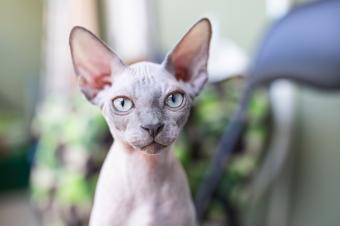
Russina Blue cat

Sight Loss in Cats

You may not realize it, but the normal eyesight of a cat is superior to the eyesight of a human with 20/20 vision. This means cats are already starting out with an advantage over us, but that's not the end of the story.

Along with superior vision, cats are equipped with other heightened senses that help them find their way around. A cat's whiskers are an extremely important part of its sensory system, and so are the hairs between the pads of the paws. By no means as sensitive as a dog's olfactory system, a cat's sense of smell is also far more delicate than our own. They can smell things we normally only rely on our vision to detect, such as water.

Since cats make such good use of their other senses, they are not at as much of a disadvantage when their sight begins to fail. This is why many owners simply do not realize that their cat is losing vision until the problem is well advanced.

Let's look at some of the most common causes of feline blindness, and then we'll discuss ways to help an affected cat.

Common Causes of Feline Blindness

Glaucoma

Glaucoma is a leading cause of feline blindness. The condition causes a build up of pressure within the eyeball that gradually distorts the vision. The disease is treatable in the early stages by administering medication. If left untreated, the damage to the ocular nerve and retina result in permanent blindness.

Cataracts

Although not commonly found in cats, cataracts can lead to blindness. The condition in felines is typically caused by an injury to the eye that leads to a clouding of the lens.

The lens itself is composed of protein and water. In a healthy lens, the arrangement of the protein allows light to pass through the lens, but when the protein is damaged, it begins to clump together. This causes the signature thick and cloudy look associated with cataracts. If the cataract continues to spread, it will require surgery to correct the problem.

Progressive Retinal Atrophy

Simply referred to as PRA blindness, this incurable condition commonly linked with canines takes its toll on the feline population too. PRA causes a slow degeneration of the retinal tissue, resulting in gradual and eventually complete blindness. There is no cure for this disease.

Feline Hypertension

Cats already suffering from illnesses such as kidney disease or diabetes may also be at risk for hypertension. This condition can be hard to detect without a veterinarian's help, but symptoms can include bloodshot eyes and unresponsive pupils.

There is currently no active treatment or medication to relieve hypertension in cats, but disease management includes providing your cat with a low-sodium diet and reducing stress in his environment. This is in addition to providing the proper treatment for any accompanying conditions.

Tumors

Tumors of the brain, iris and eyelid can all cause blindness. Some cases can be treated by surgical removal of the mass, but in others it may be necessary to remove the entire eyeball, resulting in permanent blindness.

Conjunctivitis

Conjunctivitis is an infection that causes the inner eyelid to become red, swollen and itchy, all symptoms indicated by the nickname "pink eye". It can have a number of causes, including chlamydia and herpes virus.

Although blindness is not a direct result of a conjunctivitis infection, recurring infections can cause vision deterioration as your cat rubs its eyes to get some relief. Treatment for conjunctivitis includes administering medication either orally or with eye drops, depending on whether the source of the infection is bacterial or viral. However, it is tough to get rid of, and the infection is likely to resurface in the future.

Injuries

Injuries, whether self-inflicted from scratching or caused by fights or accidents, can easily cause scarring or loss of an eye. Treatments are varied according to each situation, but it's not always possible to prevent sight loss.

Managing Your Cat's Blindness

So, when all medical options have been exhausted, what can you do to manage your cat's sight loss? It may be easier than you think.

Here are a few tips on living with feline blindness:

  • Keep things in the same place. Resist the urge to rearrange your furniture or move your cat's litter box and food dishes.
  • Keep clutter to a minimum. The less obstacles your cat has to negotiate, the better off he'll be.
  • Maintain your cat's regular schedule. Now is not the time to begin feeding in the evening rather than the morning, or vice versa. Major schedule changes will only add to your cat's disorientation.
  • Try to keep your own work schedule on an even keel. Your cat never could read a clock, but he has become accustomed to your regular comings and goings, and will depend on that schedule now more than ever.
  • Talk softly to your cat to announce your presence. Chances are he's already caught your scent, but it's always good to remind him you're there without startling him too much..


Comments

Hi Kathy,

I agree with you. If the cat still has quality of life and seems to get around okay, I wouldn't put her down. As long as your mother doesn't move furniture around on her, she'll likely be okay, especially as the condition came on gradually. Obviously she can't go outside and any major changes might be a hardship. To me, you should only put an animal down if she is in pain or has a highly communicable and fatal disease. She may still have several good years left.

-- Contributed by: LoriSoard

My mothers cat will be 19 in a few months. She gradually lost her hearing about a year ago. A few years ago she was diagnosed with Progressive Retinal Atrophy. It seems now that she is almost completely blind. She is healthy otherwise, gets along fine and eats well. My question is, how much of a hardship is being deaf and blind in any older cat? Some people are telling my mother that the humane thing to do would be to have euthanized. I disagree. What do you think?

-- Contributed by: Kathy

Hi Marianne,

I'm so sorry this happened to your cat. What a good "Mommy" you are to him to take such good care of him. Whether or not he regains his vision will depend on how much damage is done. Do you know how long his heart stopped? That will also make a difference in the impact of the damage. I would also take him back to the vet (or another vet, if you have concerns over the first) and see if there is anything additional you can do to help him regain his vision or get past his panic attacks. It does sound like he is just scared. Even if he never regains his vision, he will likely adjust with time and calm back down. Please check back and let us know how he's doing.

-- Contributed by: LoriSoard
> See All Comments on this article    


Comment on Feline Blindness


(Displayed with your comment)                        (Will not be displayed)
Verification Code:   
    

Cats


E-Mail Updates

Sign up for a free LoveToKnow e-newsletter to get exclusive recipes, decorating tips and great information you need!

Receive offers from our partners.

Read our privacy policy.


PRINT THIS PAGE

EMAIL TO FRIEND


You are here: LoveToKnow » Family & Lifestyle » Cats » Cat Health and Health Problems » Feline Blindness