Feline Kidney Disease
From LoveToKnow Cats
Feline Kidney Disease is the leading cause of death for older cats. Read on to learn more about the causes, diagnosis and treatment of this serious feline ailment.
About Feline Kidney Disease
Feline Kidney Disease may be divided into two distinct types:
- Acute Renal Failure
- Chronic Renal Failure
Both types result in kidney failure, but the onset of each has a different cause.
Acute Renal Failure
This type of feline kidney disease is characterized by complete organ failure; the kidneys simply cease to function. Onset is usually quite sudden, can happen at any age, and is usually caused by the ingestion of toxins, most notably anti-freeze.
Acute Renal Failure is almost always fatal, but if treated immediately and aggressively by your veterinarian, the kidneys regain their function and your cat goes on to live a normal lifespan. The key is getting immediate medical attention. If you think your cat has lapped up some anti-freeze, and shows any of the symptoms described below, get him/her to the vet's at once.
Chronic Renal Failure
Chronic Renal Failure is the most common form of Feline Kidney Disease. If your cat lives long enough, chances are he/she will eventually develop this illness, and although this may sound dire, it is really just a reflection of the fact that due to improved diet and veterinary care, cats are living much longer lives.
Chronic Renal Failure is a slow decline in kidney function, and as such, it can be hard to notice at first. Kidney function has to be decreased by as much as 70% before it begins to affect a cat's general health.
Outside of a complete kidney transplant, chronic Feline Kidney Disease is progressive and results in death. That said, if your cat is diagnosed with this disease, you can manage it in much the same way as people care for cats with diabetes, and keep your cat in relatively good overall condition for months, if not years.
Symptoms and Diagnosis
Symptoms
Symptoms of kidney disease in cats can be subtle, since cats are good at disguising discomfort.
Watch for:
- Loss of appetite
- Increased drinking
- Frequent urination
- Vomiting
- Dehydration
You can check your cat for dehydration by pulling up a fold of skin at the scruff of the neck and releasing it. If it quickly resumes its original shape, your cat may be well-hydrated, but if it holds the peak and only slowly returns to its original shape, your cat is dehydrated and you should seek treatment at once. Your vet can provide some immediate relief by putting the cat on IV fluids while the situation is being assessed.
Diagnosis
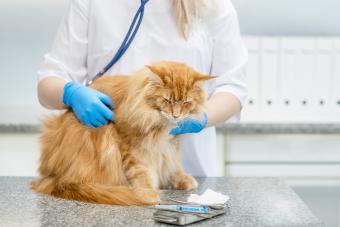
Only your vet can diagnose Feline Kidney Disease, and will need to do a complete blood workup in order to check the levels/balance of various blood components, including:
- Blood Urea Nitrogen (BUN)
- Creatinine
- Phosphorus
The results of this testing will reveal just how far the disease has progressed, and help your vet determine just how aggressive treatment needs to be.
Treatment
The most common and effective treatment for Feline Kidney Disease is to administer fluids. This not only re-hydrates your cat, but flushes toxins out of the kidneys as well.
Administering fluids is something you can easily learn to do yourself at home, rather than putting your pet through the stress of going to the vet for every treatment.
Fluid Therapy
Fluid therapy involves administering subcutaneous injections of lactated Ringer's, a type of saline solution. You can purchase the 1,000 cc bags of fluid, tubing and needles all online with a vet's prescription, and it is significantly less expensive than buying it from the vet.
Your vet can teach you the procedure, which may sound intimidating, but it's easy once you've done it a time or two. You will learn how to attach the tubing and needles to the fluid bag, how to insert the needle and start the fluid flow.
Giving Fluids at Home
When you first learn the process of actually injecting fluids under your cat's skin, you may think 'there's no way my cat is going to sit still for this', but you may be surprised. Dehydration makes cats feel miserable, and they quickly learn that even though the prick of the needle going through their skin is unpleasant, the result makes them feel immeasurably better. Many cats come to actually look forward to "getting their water", and you can make this an opportunity to spend cuddle time together.
Once you become proficient, the whole process shouldn't take more than ten or fifteen minutes.
Be aware, it takes a while for a cat to absorb the fluids, so immediately after treatment, you may notice a spongy spot on your cat at the injection site. Don't worry, this is normal and will subside as the fluids are absorbed into kitty's tissues.
Disease Management
Your vet will want to see your kitty periodically to re-check blood levels and adjust therapy accordingly.
There is no cure for Feline Kidney Disease, outside of a kidney transplant, but you can manage the illness with a little fortitude. Home fluid therapy can make your pet feel much better, keep the kidneys functioning and extend your pet's life by months, if not years.
Comments
Hi Erin,
That sounds like a wonderful success story. I'm glad that you had so much success with the medications and that she lived to an old age. Thanks for the input. Maybe it will help someone else whose cat is suffering this same problem.
-- Contributed by: LoriSoardMy cat lived to be 22 with kidney disease. She was diagnosed at about 13. One thing the vet did not tell us is that the disease can raise the bllod preasure which actually caused her to go blind. i caught it fast and she was put on blood pressure meadication and regained her vision! she took a pill everyday for the rest of her life, and fluids a couple times a week and she was a happy kitty.
-- Contributed by: erinHi Karen,
More than likely the urge to spray will subside once the diabetes is under control. The urinary tract infections likely didn't help anything either. Around here, you can only purchase the k/d from a veterinarian's office. Ask about buying in bulk or other discounts to reduce the price a bit. It is possible there are online sources, but be sure you buy from an authorized reseller to be on the safe side.
-- Contributed by: LoriSoardThis page has been accessed 6,700 times. This page was last modified 03:46, 7 July 2008.
© 2006-2008 LoveToKnow Corp.