Feline Mange
From LoveToKnow Cats
Feline mange is a skin disease that cats get. It is easily spread from animal to animal. If left untreated, mange can actually kill your cat.
Causes and Types of Feline Mange
Causes
Mange is caused by tiny parasites called mites that burrow beneath the surface of your cat’s skin. They suck the blood of your pet and may also cause allergic reactions. While all mange is caused by these mites, there are several different species of mites, and each causes a different kind of mange.
Cats aren’t the only animals that can get this disease. It is very contagious and can be transmitted to nearly any mammal or bird. Although there are different types of mange, all types are very contagious. If you suspect that your pet may have this condition, you should take her to the vet right away. If one animal in the home has mange, all the animals living there should also be treated.
Types
- Feline scabies, also called Notoedric mange
- Sarcoptic mange, which can also affect humans
- Cheyletiella mange creates a dandruff-like condition
- Otodectic mange, another name for ear mites
- Demodectic mange, a type of mange that is not discernible until there are problems in the immune system. There are three types of demodectic mange:
- Demodex canis afflicts dogs.
- Demodex cati afflicts cats.
- Demodex gatoi also afflicts cats.
Symptoms
Feline mange is usually easy to spot on your pet. The fur is patchy with scabby looking skin beneath it. Here are the symptoms of mange:
- Weight loss
- Brown marks on the nose
- Brown marks on the ears
- Discharge from the ear
- Black discharge from the ear resembling coffee grounds
- Crust on the ear
- Scabbed patches on the head or neck
- Patchy hair loss
- Very thin fur
- Scabs and crusty patches
- Excessive scratching
- Loss of appetite
- Dehydration
Images of Cats with Mange
There are a few websites that have images of cats with mange. The images can be disturbing, but they can help give you an idea whether or not your cat has mange. If you suspect she does, you can move on to calling your vet.
Diagnosis of Mange
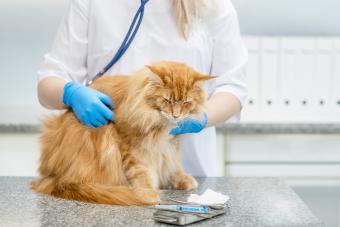
Once the vet takes a look at your cat, he will be able to determine whether or not feline mange is a possibility. He will assess the overall condition of your pet and whether or not she has lost excessive amounts of weight or has become dehydrated.
The vet will take a sample of skin cells, referred to as a scraping or a biopsy, to view under a microscope. If he finds mites, he will then try to determine exactly which type they are.
Treatment of Mange
Depending on the type of mange the vet finds, the course of treatment may include one or a combination of the following:
- Cortisone for itching
- Oral doses of Ivermectin
- Shampooing with a medicated shampoo
- Applying a lime sulfur dip
- Hair clipping may be necessary
- Using a topical product like Revolution to treat current mites and prevent future infestations
It should be noted that some mange treatments can be harmful to cats, so it's best to let your veterinarian set the course of treatment and the dosages rather than trying it at home on your own.
Successful treatment can take as long as six weeks to completely radicate the infestation, and it is sometimes necessary to treat the cat with antibiotics to address opportunistic skin infections. Pregnant women should not handle a cat that has been dipped, nor should they shampoo the cat with the medicated shampoo. These products contain a powerful pesticide that can be absorbed into the skin. For this reason a pregnant cat shouldn’t receive these treatments either.
Cleaning the Environment
Since feline mange is caused by a parasite, your cat can easily be infected again if you don’t clean the cat’s environment properly.
Bedding should be disposed of or washed thoroughly. All carpeted areas should be vacuumed carefully and the vacuum cleaner bag disposed of immediately. Upholstered couches, chairs and other items should also be vacuumed to make sure that there aren’t any mites left. The vacuuming and cleaning should be kept up with while the cat is being treated for mange and for a week or so afterward.
Prognosis
While feline mange can cause death for a cat if left untreated, the prognosis for a cat that receives timely treatment is very good. Since allergies and other conditions can also look like mange, it is important to take your cat to the vet as soon as you suspect that feline mange might be a possibility. Not all hair loss in cats is due to mange so other possibilities should also be investigated.
Learn More
This page has been accessed 4,244 times. This page was last modified 01:06, 13 January 2009.
© 2006-2009 LoveToKnow Corp.

Visit us on facebook