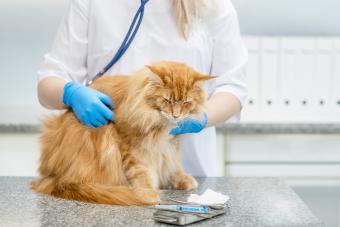
As an attentive pet owner, you've probably wondered how cat vaccinations can protect your pet from a variety of common diseases. Learn about how vaccines work, as well as which vaccines should be a priority for your cat and which vaccines can be administered as needed.
Cat Vaccination Schedule
Each cat is an individual; therefore, your vet will determine which vaccines your pet needs and when based on their age, health, and lifestyle. The following table provides a schedule for basic vaccinations, but it shouldn't be considered an absolute rule.

Common Cat Vaccines
According to Dr. Christianne Schelling, DVM, the following vaccines are considered "core vaccines," or the most necessary for all cats, regardless of age or lifestyle.
- FVRCP: This combination vaccine protects cats against the following three viruses. This vaccine is often administered every three years or based on the manufacturer's guidelines.
- Feline Viral Rhinotracheitis: This is a highly contagious upper respiratory tract infection that causes fever, coughing, sneezing, and eye discharge.
- Calicivirus: This is another highly infectious respiratory infection that is contracted through direct contact with infected cats and their feeding bowls or bedding.
- Panleukopenia: This is a potentially deadly feline virus that is comparable to Parvo in dogs. Common symptoms include vomiting, diarrhea, dehydration, and extreme lethargy.
- Rabies: The rabies virus must also be guarded against with a vaccination received every one to three years, according to your local laws and the vaccine manufacturer's guidelines. This deadly virus attacks the central nervous system, causing bizarre behavioral changes, foaming at the mouth, possible aggression, general stupor, and partial paralysis. It is passed through direct contact with bodily fluids and remains active for a time, even after death.
Additional Vaccines
Other individual cat vaccines are administered on an "as needed" basis, as determined by your veterinarian. These are sometimes called lifestyle or "non-core" vaccines.
- Feline Leukemia Virus (FeLV): The most common and highly recommended lifestyle vaccine protects against feline leukemia, an incurable viral infection contracted through exposure to infected bodily fluids, such as urine, saliva, tears, and mother's milk. The virus acts as an immunosuppressant that causes cancer. The American Association of Feline Practitioners (AAFP) recommends that all kittens receive this vaccine, but continued vaccination is at the discretion of the vet, based on risk.
- Pneumonitis: Also known as feline chlamydiosis, this is an inflammatory infection of the respiratory system that can progress into pneumonia.
- Feline infectious peritonitis (FIP): This is a contagious virus that comes in two forms. The wet variety causes fluid to build up in your cat's abdomen, while the dry variety causes eye lesions, anorexia and dehydration. The disease is almost always fatal. Although an FIP vaccine is available, its efficacy is questionable, so it's not typically administered in practice.
How Feline Vaccines Work
Vaccines stimulate your pet's immune system by delivering a minute, weakened or dead dose of an actual disease in order to prompt the creation of antibodies to attack and defeat the intruder before it can overwhelm your pet's body. Cells in your pet's bloodstream retain the memory of which antibodies were successful against a particular organism and immediately produce more each time your pet is re-exposed to the pathogen.

Most kittens receive a series of three to four vaccinations beginning around the age of 6 weeks, which is about the time they wean and stop receiving immunities from their mother's milk. These boosters provide each kitten with enough temporary immunities until their system is mature enough to sustain that immunity for at least a one-year period.
Once a cat reaches 1 year of age, they will likely receive a yearly booster for the rest of their life, depending on the type of vaccine and your veterinarian's recommendation.
About Vaccine Associated Sarcoma
It's fairly rare, but in some incidences cancerous tumors can form at the vaccination site. Historically, the most common vaccination site was in the scruff of the neck, which meant that tumor removal was complicated by the presence of so much muscle and bone tissue. Cats with these growths had a poor prognosis; therefore, action was taken to help prevent these cases.
The AAFP recommends that vets now give cat vaccines in the leg area, so that if a tumor does develop, there is more room to work around it. At the very worst, a cat may lose their leg instead of their life. As an extra precaution, vaccine manufacturers are now creating non-adjuvanted vaccines, which practically eliminate the risk of vaccine-site tumors.
The thought of your pet developing cancer from a cat vaccine is admittedly alarming, but in reality it is not likely to happen. Your cat has a far greater chance of contracting one of the life-threatening diseases that the vaccines protect against, so opting to avoid vaccinations might not be a sound decision.
To Vaccinate or Not to Vaccinate ...
There are some risks that go along with the practice. In addition to the slim chance of vaccination sarcomas, a small number of cats actually contract a case of a particular disease when modified live viruses are used and the cat's immune system fails to adequately respond. Although these are both possibilities, the incident rate is not high enough to justify foregoing cat vaccines altogether.
Separating Vaccines
There is, however, a good case for giving cat vaccines singularly, rather than giving several shots in one visit. More than one vaccine is sometimes simply too much for a cat's system to handle all at once, especially for small kittens, senior cats, or cats with chronic illnesses such as diabetes and kidney disease. For such pets, a single vaccine can be administered one dose at a time, with sufficient time allowed in between (approximately two to three weeks) for your cat's system to adjust.
Vaccines Really Are Beneficial for Your Pet
Overall, cat vaccines are highly beneficial for your pet, preventing them from contracting a number of deadly and devastating diseases. Although there are some risks involved, these are minimal compared to the protection each booster provides. Let your vet be your guide to exactly when and which vaccinations your feline friend should receive.