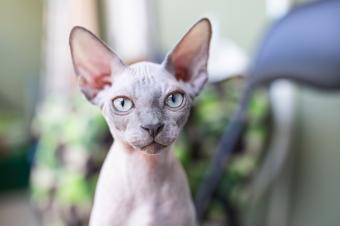
If you're considering cat breeds like the Sphynx, take a moment to learn some fascinating facts about hairless cats. These distinctive and sleek kitties can make exceptional pets.
Secrets of Hairless Cats
In the movie Austin Powers, a feline character named Mr. Bigglesworth started out fluffy enough but lost his fur through misadventure. In reality, hairless cats are not made, they are born that way, barring any skin disorders that result in baldness.
Gene Causes Lack of Fur
Genetics play a role in how much fur any cat has, but whether the gene that results in hairlessness varies from dominant to recessive from one breed to the next.
For example:
- In the Sphynx breed, the culprit that causes the hairless condition is a recessive gene that must be present in both parents to produce a hairless kitten. While two hairless mates will produce hairless kittens, two furred mates may also produce one or more hairless kittens if each parent harbors the recessive gene in its background.
- In the Peterbald, a dominant gene actually causes hairlessness.
Hairless Cats Are Not Completely Bald
The term "hairless" can also be a bit of a misnomer. Some of these cats do carry a very small amount of peach fuzz while others may even have a very short, brush coat. However, the overall effect is usually that of a cat with little to no fur. Their regular body temperature is about 4 degrees warmer.
Warm Cats From Cold Countries
Despite looking like a cat fit for warmer weather, most hairless cat breeds originated in countries with colder climates such as the Sphynx from Canada and Peterbald and Donskoy from Russia. Another temperature-related feature of these cats is that they are actually warmer than other cats with hair.
Hairless Cat Patterns and Colors
Despite the fact that they have no hair, hairless cats still can come in different colors and patterns. You can see common patterns like tortie and tabby and solid colors like black, cream, and white on their skin.
Watch Out for the Sun
Hairless cats are at a higher risk of sunburn than other types of cats. Without the protective covering of fur, their skin can be easily damaged by the sun. Most hairless cat owners keep their cats indoors to protect their skin and use sunscreen recommended by their veterinarians in the event they do go outside.
Hairless Cat Breeds
Although hairless kittens do occasionally pop up unexpectedly in a litter from time to time, there are actual cat breeds that perpetuate the hairless gene to produce these wonderful oddities.
Sphynx Cats
Also known as the Canadian Hairless, the Sphynx cat weighs about 6 to 12 pounds. They are known for being very intelligent and affectionate cats that are always close to their people. If you're looking for a cat that wants to cuddle all the time, the Sphynx is a great choice.

Elf Cats
An Elf cat is the result of breeding a Sphynx with an American Curl. They have the look of their Sphynx parent except with the curled ears of an American Curl. The Elf is not recognized as a breed by any of the major cat breeder registry association and they are a hybrid that's hard to find. The goal of the original Elf cat breeders was to create a cat like the Sphynx without the genetic diseases inherent in the breed.

Dwelf Cats
A combination of the Sphynx, American Curl, and Munchkin cat, the Dwelf looks very much like a Sphynx with the short stubby legs of a Munchkin and the American Curl's distinctive ear shape. Many people consider them to be hypoallergenic. Dwelfs are known for being very playful, fun-loving cats with a dog-like temperament.

Bambino Cats
The result of breeding a Sphynx with a Munchkin cat, the Bambino has all the personality and affection of a Sphynx wrapped in a smaller package. They range in size from 5 to 9 pounds and are considered a "dwarf" cat breed. Despite their small size, Bambinos are very energetic cats and need a lot of enrichment to keep them from being bored, particularly since they are best kept as an indoors-only cat.

Donskoy or "Don" Cats
The Donskoy originated in Russia and is known by several names including the Don Sphynx, Don Hairless, and Russian Hairless cat. Donsky cats can come both completely bald and with some hair patches on their head, tail, and legs. They can also develop a thicker coat in colder weather and will shed that coat in the spring. The Donskoy breed standard calls for a medium-sized cat of between 7 to 15 pounds. They are another hairless cat breed with a reputation for being almost dog-like in personality.

Ukranian Levkoy Cats
The product of mating Dons with Scottish Folds, this breed was developed in Ukraine in 2000. Currently, they are not recognized by any of the major international cat registries. These cats range in size from 11 to 15 pounds for male cats and 7 to 12 pounds for females. The Levkoy's name is inspired by the Levkoy plant in Ukraine that has leaves shaped much like their ears.

Peterbald Cats
The result of mating Dons with Siamese and Oriental cats, the Peterbald has five different coat types. Some cats are totally bald whereas others have a very short coat or a "brush" which is a wiry coat. Peterbalds are known for being very intelligent and affectionate and they have the "vocal" personality of their Siamese cat ancestors.

Kohana Cats
The Kohana was developed in 2002 and they are said to be a totally hairless cat. In fact, the Kohana's breeders claim the cat lacks hair follicles which gives their skin a rubbery texture. The cat is also known as the Hawaiian Hairless. They are extremely rare cats and are not recognized by any established cat registries.
Caring for Your Hairless Cat
Hairless cat breeds present definite care challenges for their owners, such as dealing with the oils on the skin. Kittens should be acclimated to regular baths so they will tolerate bathing throughout their lives.
Hairless Cats Are Best Indoors
A hairless cat is exposed to all the elements including sun, wind, and rain, so these felines should be mainly confined indoors unless suitable outdoor shelter can be provided for short periods.
Protect Their Skin From Sunburn
Sun exposure is a real concern since these cats lack the protection against sunburns and heat stroke that fur normally provides. Sunblock lotion is useful for filtering harmful ultraviolet rays, but it needs to be reapplied, just as you would for a human baby.
Provide Protection From Drafts
Drafts present another concern. It's crucial to keep these cats in a cozy environment to stave off possible respiratory infections and pneumonia. The Bambino hairless cats in the video below are wearing sweaters for extra warmth and protection.
Naked Cats Need Grooming
A lack of fur doesn't mean these pets don't need grooming. In fact, a hairless may actually require more care than some furred ones.
Regular Bathing Is Essential
Normally, fur provides protection to keep the skin from being scraped or injured in some other way. Additionally, oils produced by the skin that are distributed through normal cat grooming behaviors are instead left to collect on the skin surface. This can result in a fairly greasy cat that requires more frequent bathing.
Use Gentle Products for Your Hairless Cat
Since frequent bathing may also dry out the skin, some owners prefer to use a gentle baby shampoo followed with a bit of baby lotion applied to the skin afterward to keep it supple. Never use a blow dryer on your pet since this could result in a burn. Better to dry him or her with a soft flannel blanket, or smooth velour towel. It's also important to provide these cats with soft bedding as added protection to keep scratches to a minimum.
Health Issues Hairless Cats Face
Hairless cats, in general, are a fairly robust breed. There are just a few health issues to be aware of.
- According to Animal Planet, because there is no fur to absorb the oil, these cats can develop skin problems without regular bathing.
- PetMedsOnline indicates that the breed can lose body heat easily. Hairless cats will not tolerate extreme cold.
- Clinical research has investigated the connection between Sphynx and a condition of the heart muscle called Hypertrophic Cardiomyopathy.
Hairless Cats Are Not a Solution for Cat Allergies
Don't assume that a hairless cat is hypo-allergenic. In fact, these cats still shed skin cells and saliva flakes that contain the same proteins that cause an allergic reaction in the first place. The fact that they do not shed fur is a plus, but it isn't a complete solution for allergy sufferers.
While science is currently exploring genetic manipulation to produce a truly hypo-allergenic cat, the widespread availability of such a pet is still a long way off.

Hairless Cats Are Not for Everyone
Hairless cats have their own unique beauty and can certainly make wonderful pets, but they are not the breed for everyone. These felines require extra care to keep them warm and healthy, so you might be better off choosing one of the furry breeds unless you are prepared to give a hairless the special attention it so richly deserves. However, if you do decide you can provide the care and environment a hairless needs, you will likely find the rewards of owning one of these felines far outweighs the challenges. Hairless cats love a good cuddle and seem to truly enjoy a close relationship with their human companions.