If you've ever gone in search of your cat only to find them under the bed, inside a cardboard box, or in another hiding spot, you know how mysterious your cat can be. This is a unique feline behavior. Most cats love to hide from time to time, usually in a warm, dark location. Providing appropriate hiding places for your cat can help protect them from hazards around your home and even lower their stress level.
Why Do Cats Love to Hide?
No one knows for sure, but there are some good theories about why cats hide. A lot of experts say this habit goes back to cats' behavior in the wild. In the wilderness, a cat might look for a hiding spot or "den" to provide protection from other predators and to have a clear view for stalking prey.
Cats are frequently hyper-alert, even while dozing, so an enclosed hiding place may also allow them to relax and feel secure. Studies show that cats with safe hiding places have noticeably lower stress levels than their exposed counterparts.
Where do cats hide? Many cats enjoy hiding in spaces that are dark, warm, enclosed, and quiet, like behind furniture or even inside the box spring of a bed.

Safe Spots Where Cats Often Hide
Many cats enjoy hiding in spaces that are dark, warm, enclosed, and quiet. If you're looking for your kitty, try one of these common spots:
- Boxes, bags, and cubbies: Anywhere cats can access, including inside cardboard boxes, cubby holes, and shoe boxes, empty grocery bags, etc.
- Crawl spaces: In the corners of closets, under beds or furniture, behind floor-length curtains, or even inside the box spring of a bed
- Dark bathrooms: In the bathroom sink, bathtub, or shower
- Near warm appliances: Such as the dryer or refrigerator, either behind or on top
- Near plants: Under potted house plants, shelving, etc.
- Outside: Under shrubs or low trees in your yard, or beneath a deck or porch

Unsafe Hiding Places for Cats
It would be nice if the only danger to this hiding behavior is that you may not be able to find your feline friend when you want to. However, cats can also be attracted to dangerous spots that meet some of the same criteria as their safer alternatives.
1. Inside Household Appliances
A particularly attractive and dangerous hideout for cats is inside the clothes dryer, so it's always important to check for stowaways before you start a load. Other appliances can also pose a hazard, including the dishwasher, washing machine, and refrigerator. Basically, if the door to any appliance has been open, you should always do a quick safety check before starting the machine or shutting the door.

2. Under or Inside Heating Appliances
Cats love heat, which makes furnaces, boilers, and woodstoves particularly attractive. If your furnace has open cubbyholes or a small area through which the cat can crawl, it's best to close this off. Always check with a home heating professional to make sure any modifications are safe.
If your woodstove door has been open, always double-check the interior before tossing in wood and lighting a fire. Ashes can stay warm for a long time, making this appealing to cats. Make sure there is plenty of clearance around space heaters so a cat cannot get trapped.

3. In the Garage
The garage is full of attractive kitty hiding spots, but it's also full of danger. Cats can expose themselves to nasty chemicals, dangerous equipment, and the hazards associated with cars.
Because of the warmth of a car engine that's been recently driven, cats sometimes climb up under the hood and curl up on the warm engine block. When you start the car to leave again, they can be trapped there. Similarly, a cat may hide under a car and be vulnerable to an accident when you back out of the garage.
If possible, try to limit your cat's ability to enter the garage at all. Keep the garage door down if you have an outside cat, and always make sure indoor cats don't venture into this dangerous area.
4. Inside Recliners
The dark inner workings of your recliner can be attractive to a cat, and your furry friend can get injured when you raise or lower the footrest. If you don't know where your cat is when you sit down, take a few moments to look under your chair.
Four More Dangerous Hiding Spots
There are a few other dangerous hiding places that you should minimize or check regularly:
5. Plastic bags, which can cause suffocation
6. Open drawers and cabinets, which can cause pinching
7. Rafters and high spots, which can cause injury from falling
8. Toolboxes belonging to workers in your home
How to Make a Safe Cat Hideout
To help prevent injury and protect your cat's safety, it's a good idea to provide safe places for your cat's natural hiding behavior. To create the ideal hiding spot, simply keep in mind the qualities that attract cats.

Find a Quiet, Dark Location
Cats love to hide in places where they won't be disturbed. If you have a basement, this could be an ideal location. Similarly, you could set up your kitty hideout under a bed in a little-used bedroom, behind a couch in a private den, or anywhere else you think your kitty will have some peace and quiet.
Pick Something Enclosed
To make the hiding spot especially safe, choose a container that's mostly enclosed. A kitty condo works well, as does a cat bed with raised sides. If you're on a budget, there's nothing wrong with a simple cardboard box tipped on its side.
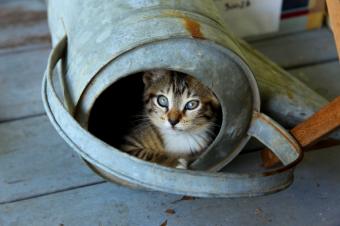
Make It Warm and Cozy
Add a soft fleece blanket to make the spot extra warm and cozy. If you can place the hideout near a safe heat register or on a heated tile floor, that's even better.

When to Worry if Your Cat Is Hiding
In addition to keeping your cat from getting injured in an unsafe hiding spot, it's important to keep an eye on hiding behavior.
- They're suddenly hiding a lot: If your cat hides more than normal or begins hiding when they haven't ever done so before, it could be a sign of illness.
- They won't stop: If the behavior persists for more than a couple of days, make an appointment with your vet for a check-up.
Hiding Makes Cats Feel Relaxed and Secure
When they're safe, hiding spots can help your kitty feel relaxed and secure. Minimize your cat's unsafe hiding behavior by eliminating hazards as much as possible and encouraging safe hiding. As a result, you'll have a happier, healthier kitty.