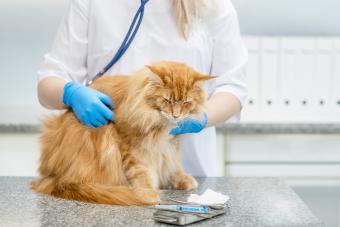
Unless you're planning to breed your kitty in the future, there are a lot of practical reasons behind the decision to neuter cats. This procedure can significantly benefit your kitty's temperament and behavior, especially when done at the proper time.
Debate Over When to Neuter Male Cats
There seem to be two separate camps when it comes to deciding the appropriate age to neuter a cat: waiting until they're mature versus doing it before maturity. It seems that recent research has shifted the preference to the latter.
Traditionally, it was thought better to hold off on neutering cats until they were mature and fully developed, usually around 6 months old. However, these days, many vets recommend neutering much younger. Developmentally, it's possible to neuter a cat as young as 8 weeks old. By this age, the tissues are not so delicate, and the procedure can be performed safely.
Experts Suggest the "Ideal Age"
A collective of veterinary experts joined forces in 2016 to get to the bottom of exactly when to neuter cats. What they discovered were findings that support spaying and neutering cats before they reach 5 months as the ideal age, which lead to the creation of a campaign called "Feline Fix by Five Months." Research reveals that it's safe to do so at these early ages and there are no adverse health effects. In fact, a study showed that complications were higher among older animals versus the prepubertal group. Younger pets also tend to heal more quickly than those that are older.
It should be noted that neutering a male well before 6 months of age can significantly affect your cat's adult appearance. They'll never develop the look of a mature male, instead remaining kitten-like in facial features. However, they'll also never have a chance to develop unwanted behaviors, such as spraying, or experience other consequences.
Addressing Post-Neuter Weight Gain
That said, many cat owners have concerns about neutering and weight gain. Although it's a popular theory that a neutered cat will grow fat, this is not a firm rule. Some evidence shows that a cat's metabolism slows with the change in hormones after alteration. However, there are also plenty of overweight, intact cats and slim, neutered cats out there.
If you don't want your cat to gain unwanted weight, be sure to feed them a balanced cat food in the appropriate amount and make sure they get adequate exercise. This is easily accomplished by providing your pet with a cat tree stocked with a few hanging toys or buying other interactive toys for them to amuse themselves.

Arguments in Favor of Neutering Cats
There are currently millions of unwanted cats living in shelters and on the streets. With so many animals homeless, it only makes sense to limit some of the breeding taking place. Plenty of loving cat owners never intend to breed their pets, yet they never have their cats spayed or neutered. However, when a female comes in heat and manages to escape through the door, they become a target for every stray Tom cat in the neighborhood.
Female strays also wander through the neighborhood singing their siren songs until normally complacent male house cats can no longer resist and try to find a way to get outside. This situation benefits no one, but spaying and neutering cats does. There are numerous other benefits associated with neutering of intact male cats.
- Neutering eliminates the chance of developing testicular cancer later in life.
- Male cats rarely have a desire to spray/mark after neutering.
- The strong odor of male cat urine is greatly reduced.
- Neutered male cats tend to make calmer pets.
- No breeding means no sexually transmitted infections.
- Neutered cats lose the hormone-driven desire to roam.
- No more fights and injuries.
- Less opportunity to get hit by vehicles.
- Reduced chance of contracting parasites.
All things considered, neutered cats have an increased chance to live longer, healthier lives.
Pre-Surgery Preparation
Neutering cats is done under anesthesia. This causes some cats to feel nauseous, and if they throw up while not fully conscious, they may aspirate, or choke to death. As a precaution, cats should fast for approximately twelve hours before any procedure. This means no food and no special snacks (it's fine to leave water out until the morning of surgery). The stomach needs a chance to empty its contents so there will be nothing to throw up. Conveniently, most veterinarians schedule surgical procedures early in the morning, so the easiest plan is to empty your cat's bowls the night before and let them sleep through their fasting time.
The Neutering Procedure
Neutering cats is actually a very simple, minimally invasive procedure compared to spaying in females.

- Once anesthesia has been administered, the veterinary assistant clips then disinfects the cat's scrotum.
- Your vet, wearing sterile gloves, makes a small incision over each testicle.
- The testicles are then gently drawn out, the cords tied and stitched closed, and the testicles snipped free. The incision in the scrotum is extremely small, and is usually left unstitched to allow for any drainage during healing.
Healing is usually quite quick, and most males will return to feeling normal after the first day. It takes approximately 10 to 12 days for the incision to heal, so your cat should be kept dry during this time. Cats who feel compelled to chew at the incision should wear a cone.
Help Control the Cat Population
As you can see, neutering is good for male cats for many reasons, and the procedure is simple and safe. It's a sound idea to neuter any cat that will not be used in a professional breeding program, and perhaps a very good idea for breeders to neuter all male kittens before sending them to pet homes. If everyone would follow through, we could easily cut the number of homeless felines by half, and that would be a very good thing indeed.