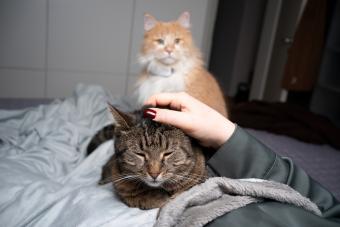
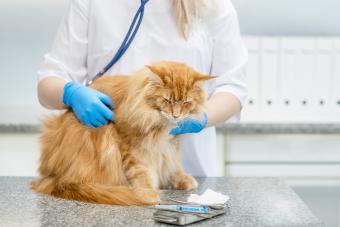
If your cat is sleeping all day and not eating or generally just seems like they're not feeling well, there's a good chance they may be sick. Cats inherently hide their sickness as a survival instinct, but knowing the common subtle signs of illness can help you get your cat the attention they need. By being aware of your cat's regular activities and their general healthy physical appearance, it will be easier to notice little changes and identify when they're sick.
1. Your Cat Not Eating or Displaying Changes in Eating or Drinking Habits
Any change in a cat's eating/drinking behavior or routine may be a sign of sickness. It can be extremely difficult for cat parents to determine the cause of appetite changes and other symptoms cats show us, but as your cat's caregiver, it's vital to be watchful for signs of digestive issues. For expert guidance on mapping digestive symptoms to underlying health problems, get a copy of LoveToKnow's eBook "Happy Tummy Cat", written by a veterinarian. Signs to watch for include:
- A decrease in food intake for more than a couple of days
- An increased or excessive appetite or thirst, which could be a sign of diabetes, kidney disease, or hyperthyroidism
- Not drinking any water
- Unintentional weight loss
2. Your Cat Is Lethargic
Although some cats sleep up to 20 hours during a 24-hour day, the average cat sleeps 16 hours each day. Even though cats spend so much time asleep, changes in their sleeping patterns may be a sign of a medical problem. A sick cat may be overly tired or weak, doesn't show interest in anything, and often also exhibits other behavioral changes or a lack of interest in food, water, and playing.
3. Your Cat Has Changes in Activity
According to The Cat Hospital, if you notice a change in your cat's activity level, either an increase or a decrease, it may be an indication the cat is not feeling well. Hyperactivity might not appear to be a cause for concern, but it could be a sign of a condition like hyperthyroidism. Alternatively, if you notice your cat is reluctant to jump up on things that were easy for them to reach before, or they seem to be jumping differently, there could be a medical reason. A noticeable change in the cat's gait, difficulty rising from a seated or laying position, or inability to find a comfortable position could also be signs of a sick cat.
4. Your Cat's Grooming Habits Change
Cats are generally clean animals, grooming themselves much of the time they are awake. When a cat suddenly stops grooming themselves, it can be a sign of stress, but it can also indicate a painful problem such as arthritis. On the other hand, a cat that incessantly grooms one spot of its body may also have a skin condition or allergies.
5. You Notice Changes in Coat or Loss of Fur
Any change in the condition or texture of a cat's coat is often an indication your pet is ill. The coat may feel coarse, greasy, or very dry. Flaking skin or significant fur loss, such as noticeable thinning or bald patches, are also signs the cat is unwell, per The Cat Hospital.
6. Your Cat Is Vomiting Excessively or Continuously
A cat throwing up an occasional hairball is normal. It's also possible a sudden change in food may lead to stomach upset, or a cat may eat too quickly or too much, leading to vomiting afterward. However, if a cat vomits often, has projectile vomiting, or vomits for an extended period, PetMD notes it may be a sign of a serious problem such as an intestinal blockage or a systemic problem.
7. Your Cat Is Hiding
It's normal for cats to hide during the day when they're looking to enjoy an uninterrupted nap. Cats will also hide as part of playtime and while expressing natural hunting behaviors. However, if your cat suddenly begins hiding more than they usually would, this could be a sign your cat is sick. This often happens among elderly cats who will hide as a result of the pain and stress they are feeling from a serious medical condition. If your cat suddenly begins hiding when they have never before or drastically increases the amount of previous hiding behavior, it's time to have a medical checkup with your veterinarian to make sure your cat is healthy.
Additional Sick Cat Symptoms
In addition, the following signs can be a cause for concern:
- Sneezing
- Runny nose or greenish discharge from the nose
- Redness around the nose
- Coughing
- A change in the cat's breathing rate
- Scratching or shaking its head
- Excessive drooling or salivating
- Inflammation of the mouth
- A noticeable bump on its mouth
- Urinating outside of the litter box or other abnormal litter box behavior
- Any change in bowel movements, including diarrhea or constipation
- Increased vocalization or yowling
When to Seek Immediate Care
While it's always important to see your veterinarian any time your cat is sick, if you notice any of the following signs of illness in your cat, seek immediate medical care.
- Seizure
- Blood in the stool
- Blood in urine
- Protracted vomiting
- Labored breathing or panting
- Paralysis
- Straining to urinate
- Hemorrhage
- Jaundice - any yellowing of the eyes, gums, or skin
- Pale gums - an indication of shock or anemia
- Abnormally low or high body temperature
- If the third eyelid is visible
Symptoms of a Sick Cat
Cats are not able to tell their owners if they are not feeling well. As responsible pet caretakers, it is up to each owner to recognize symptoms of an illness and seek medical care as soon as possible.