Does your cat sometimes look like they’re hard at work in the biscuit factory, making and kneading enough biscuits to feed an entire village? You're not alone, and there are actually a few reasons why cats knead with their paws. From territorial marking to emotional security and love, this deeply rooted behavior is fascinating, adorable, and completely normal.
What Are Kitty Biscuits?
You've probably witnessed the behavior hundreds of times. You might even have been the recipient of it. Your cat picks out a spot (their own comfy cat bed, your couch cushions, or, better yet, your lap) and begins working those paws like they're stomping grapes with Lucy and Ethel. Sometimes. it's just soft pawing, but sometimes, the claws spring into action. Voi la — you have cat biscuits, also known as kneading.
But Why Do They Do It?
Utterly adorable, this action is a very natural behavior for cats, and a few deep-seated habits are at play.
Emotional Security
One reason cats make biscuits or knead on blankets stems from their kittenhood. Kittens must nurse their mother to get life-sustaining milk. Kneading mom's teats stimulates the let-down response and causes the milk to flow more freely.
The movements are instinctive, and since they create a reward (food!), a kitten may naturally transfer the behavior to other places and things in the hope of more good things to come. This is usually the case when a cat kneads and bites or suckles on a blanket.
Express Joy
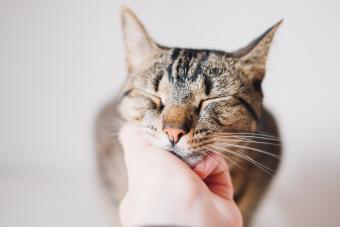
Often, cats will make biscuits out of pure pleasure. If they're happy and feeling comfortable, they'll knead on whatever they're near, like a fuzzy blanket or even your belly. This happy kneading is usually accompanied by purrs and can happen spontaneously or might be prompted by pets.
Territorial Marking
Cats have scent glands located in the pads of their feet near the base of their claws, and each feline produces their own unique scent. While humans don't generally notice this scent, other cats and animals can. So, the scent serves as a marker to show where your cat has been or what she wishes to claim for her own.
When kitty wants to mark out the boundaries of their territory, they will paw and perhaps even run its claws across the item, leaving those signature scratches and a bit of personal "eau de feline" in the bargain.

Cat Kneading is a Flattering Behavior
Felines just seem to have a deep-seated need to knead, and most are not particularly concerned about where they make biscuits. However, if they do choose just one item to knead, it might be because they're marking it as their own. So the next time kitty begins to work those pads before curling up in your lap, realize how special you must be. Not only have they chosen you as the exact spot on the planet where they'd most like to be, they're also letting the rest of the animal world know that you belong to them.